10A Ulyanova St., Nizhny Novgorod
Mon–Fri 08:30–18:00 · Sat 08:30–13:00
Contraindications may apply. A professional consultation is required.

Dr Pervushkin · Nizhny Novgorod

Birth-related concerns in children

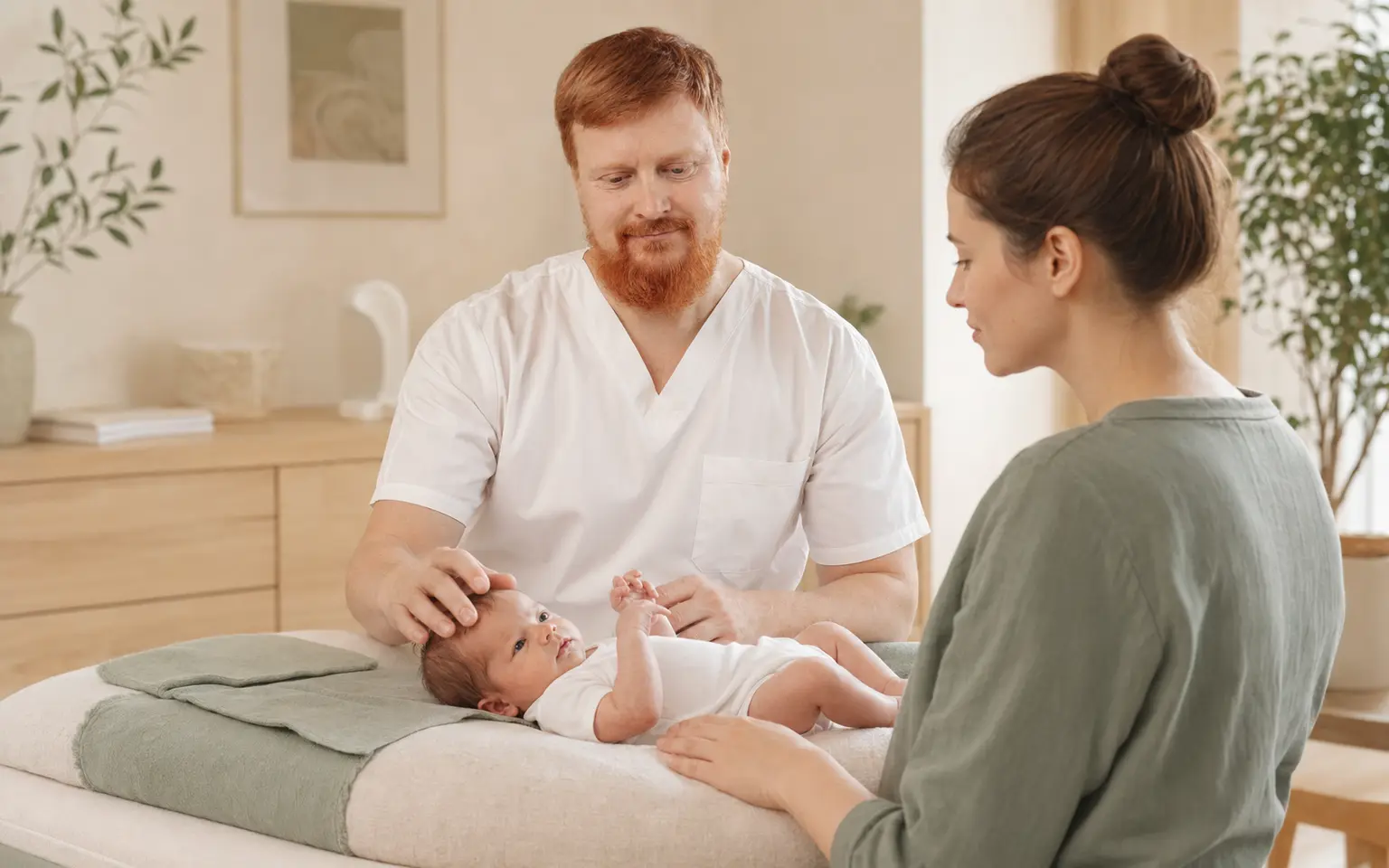
Any concerning symptom in a newborn should first be assessed by a paediatrician. Osteopathic consultation is possible only after safety review and does not replace paediatric follow-up.

Understanding the concern

What to know before booking

Birth is a significant event, but not every asymmetry or unsettled period is a birth injury. Diagnosis relies on obstetric history, neonatal or paediatric examination and, where needed, neurology, orthopaedics and investigations.

Persistent head-turn preference, unusual posture, feeding latch difficulty or distress with movement may warrant planned assessment. These signs are non-specific and can occur during normal adaptation or with different conditions.

The osteopathic physician works gently, checks indications and stops if warning signs appear. The aim is to support functional mobility within an agreed paediatric plan, without promises to change neurological development or correct birth effects in one session.
Reasons to consult

Common concerns

This list helps orientation but does not establish a diagnosis or confirm an indication for osteopathic care.

  • persistent head turn or tilt to one side
  • noticeable postural asymmetry already reviewed by a paediatrician
  • distress during certain movements or positioning
  • feeding difficulty after acute causes have been excluded
  • parents needing guidance on safe positioning and observation

Initial consultation

How assessment works

Assessment and next steps depend on history, existing investigations and the condition on the day.

  1. 01

    Pregnancy, birth history, postnatal condition and maternity discharge information.

  2. 02

    Paediatric assessment of posture, spontaneous movement and response without forceful manipulation.

  3. 03

    Decision on urgent paediatric care, neurology, orthopaedics or feeding support.

  4. 04

    Explain aims, limits and signs parents should monitor at home.

Team approach

Practitioners who may help

Roles are kept distinct: medical diagnosis and treatment are not replaced by wellbeing or consultation practices.

Urgent care

Do not wait for a routine visit

Seek urgent medical care or call emergency services for:

  • !lethargy, refusal to feed, blue colour or breathing difficulty
  • !seizures, repeated vomiting, bulging fontanelle or high fever
  • !sudden reduction in limb movement, continuous high-pitched crying or rapid deterioration

Patient questions

Key questions

When can a newborn see an osteopathic physician?+

After neonatal or paediatric assessment and when the baby is stable. Timing depends on birth history and the treating clinician’s advice.

Are the techniques safe?+

Only gentle, parent-explained actions are appropriate after contraindications are checked. A parent remains present and may stop the assessment at any time.

Can osteopathy correct head shape?+

Head asymmetry needs paediatric and sometimes neurosurgical or orthopaedic assessment. Positioning and functional support may be discussed, but outcomes cannot be guaranteed.

Have a question?

We will help you choose the right practitioner

Call the administrator or open Telegram or MAX. Please do not send medical records through public channels.

+7 (910) 395-29-70