Meditation and attention
Observe habitual reactions, define a concern and discuss it with a practitioner.
Web edition
For people who want to take an informed role in their health: key ideas from the printed guide, careful explanations and every resource behind a working link.

Where to begin
The original guide links work with the body, attention and everyday habits. This web edition preserves that route while separating educational resources from medical advice.
Guide pathway
This is not a universal treatment plan, but a useful sequence of questions to discuss with your practitioner.
During an in-person consultation the physician assesses concerns, indications and contraindications. Osteopathy and related methods do not replace required diagnostics.
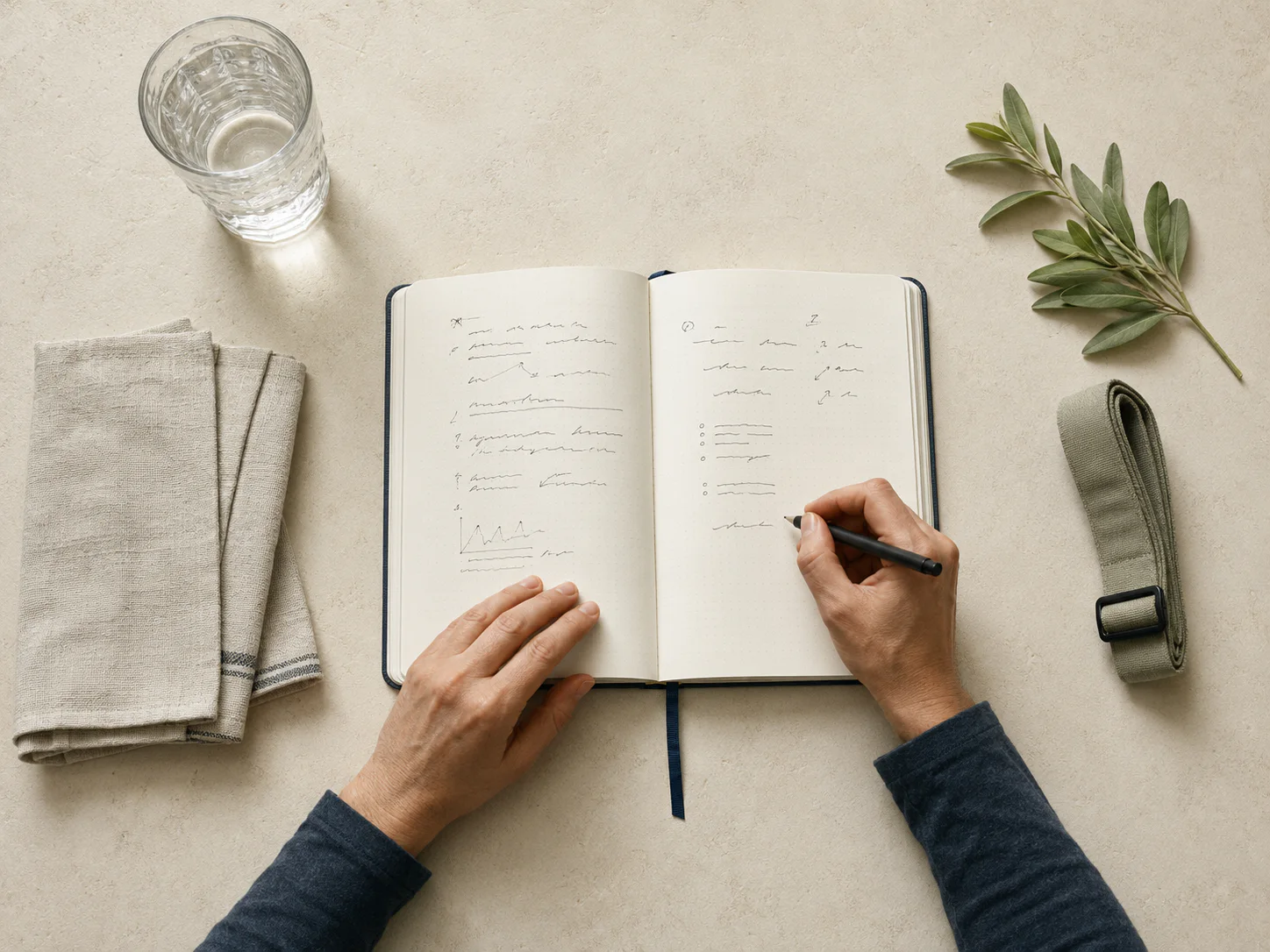
Mental hygiene, journalling and meditation may support self-observation without trying to diagnose yourself.
Gentle activity and breathing exercises should remain pain-free and reflect your health, age and medical advice.
Sleep, nutrition, hydration and movement work best as sustainable, individual habits rather than a one-off effort.
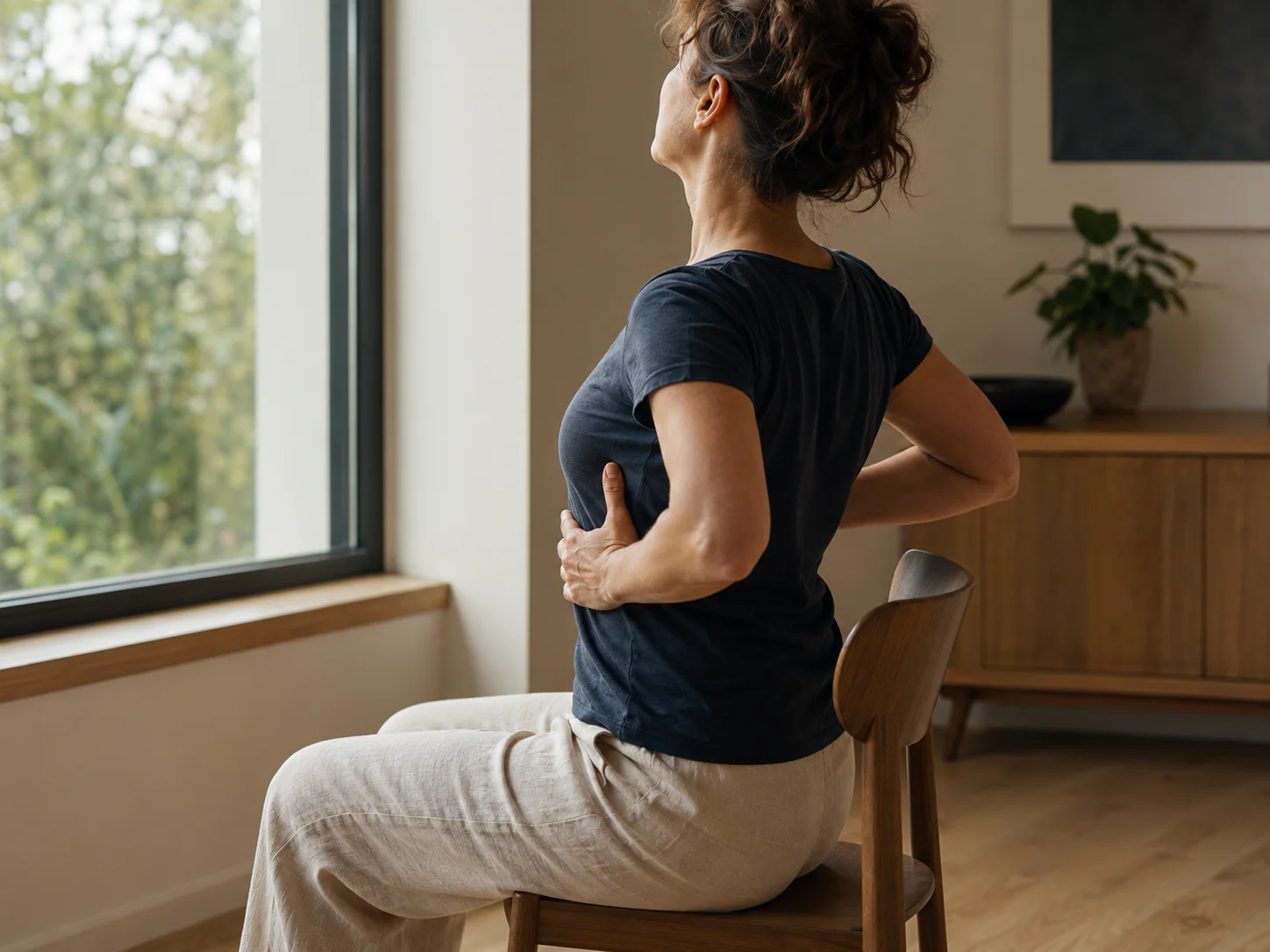
Body, movement and breathing
Moderate activity may support everyday wellbeing, but exercise should not be pushed through pain. Stop and seek medical advice after injury, or with marked dizziness, breathlessness or worsening symptoms.
View exercisesIn brief
The wording has been updated to avoid presenting universal prescriptions.
Observe habitual reactions, define a concern and discuss it with a practitioner.
Follow thirst and medical advice, taking heart and kidney health and medicines into account.
Aim for a varied diet and choose an individual routine, especially with chronic conditions.
Move daily within a comfortable range and discuss exercise with a professional when limitations apply.
Everyday support
You do not need to change everything in one day. Record symptoms, questions and responses to activity, then discuss them with your physician. This helps make advice specific and realistic.
All QR codes updated
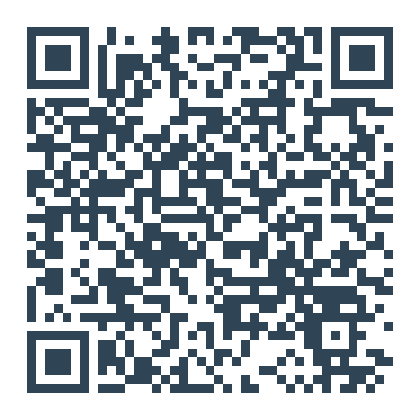
Each card opens with a normal click. Its QR code points to the same working address for use on another device.
Books, articles, videos and website pages that offer a useful starting point.

Printed and digital publications.
Open resource
Lectures, conversations and the video archive.
Open resource
Articles about health, the body and everyday habits.
Open resource
The official educational programme, modules and PDF.
Open resource
Original materials in the clinic catalogue.
Open resource
The full film and accompanying notes.
Open resource
On personal responsibility and consistent effort.
Open resource
An archived conference video.
Open resource
Qualifications, fields of work and credentials.
Open resource
What to expect, indications and limitations.
Open resourceResources for reflection and discussion with a practitioner, not self-diagnostic tools.
An introduction to the method and its boundaries.
Open resource
Audio practices for calm self-observation.
Open resource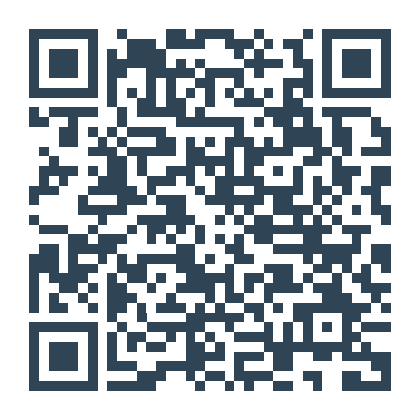
A note on inner support and stability.
Open resource
An original practical course hosted externally.
Open resource
An overview of the approach, format and important caveats.
Open resourcePractices should stay within a comfortable range and stop if pain, dizziness or worsening symptoms occur.
Additional everyday resources that do not replace personalised medical advice.
Medical note
It does not diagnose illness, prescribe treatment or replace in-person care. Call emergency services for sudden severe pain, speech or movement problems, loss of consciousness, marked breathlessness, high fever or rapid deterioration.
Print edition
You can download or print the PDF. Use the updated QR codes on this page for links, as several codes in the old file pointed to the wrong resources.
Have a question?
Call the administrator or open Telegram or MAX. Please do not send medical records through public channels.