
10A Ulyanova St., Nizhny Novgorod
Mon–Fri 08:30–18:00 · Sat 08:30–13:00
Contraindications may apply. A professional consultation is required.

Dr Pervushkin · Nizhny Novgorod

Childhood injuries

After a fall or impact, injury assessment comes first. Osteopathic techniques do not replace imaging, immobilisation, surgery or trauma follow-up.

Understanding the concern

What to know before booking

In children, fractures or growth-plate injuries can resemble a minor bruise. Pain intensity alone is unreliable; mechanism, swelling, deformity, movement and the child’s overall behaviour matter.

During the acute phase, emergency or trauma care is the correct route. After healing is confirmed, guarded movement, muscle tension, altered load distribution and restrictions in nearby joints may persist.

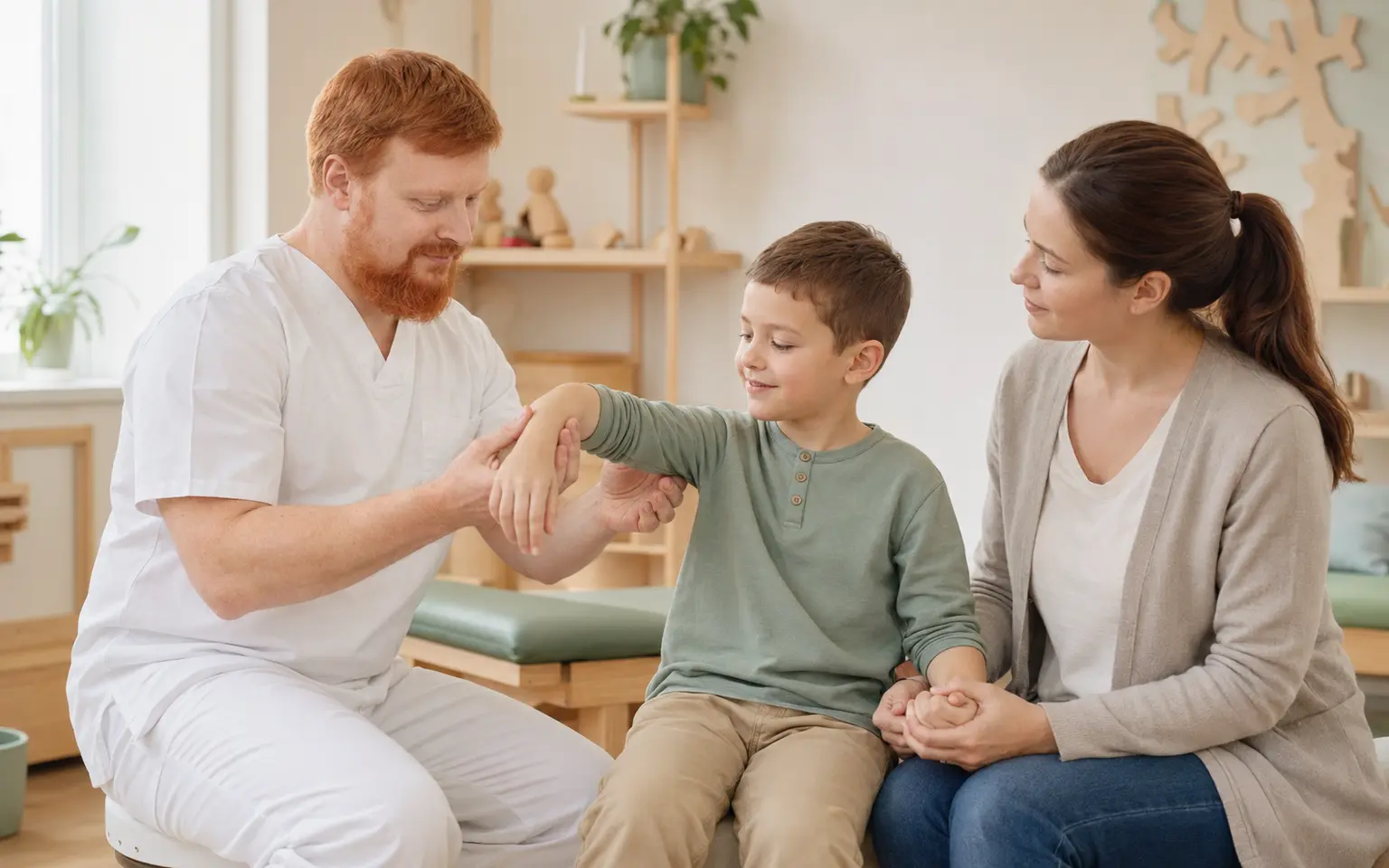
During recovery, an osteopathic physician may assess functional mobility and a movement practitioner may support gradual return to balanced loading, guided by the trauma discharge plan and age-related limits.

Reasons to consult

Common concerns

This list helps orientation but does not establish a diagnosis or confirm an indication for osteopathic care.

  • stiffness after cast or brace removal
  • guarded posture and movement avoidance after healing
  • muscle tension around a previously injured area
  • altered gait after full weight-bearing is allowed
  • need for a safe return-to-activity plan

Initial consultation

How assessment works

Assessment and next steps depend on history, existing investigations and the condition on the day.

  1. 01

    Mechanism and date, treatment, imaging and permitted loading.

  2. 02

    Confirm the acute phase is complete and there is no reinjury.

  3. 03

    Age-appropriate assessment of movement, strength and functional restriction without provoking pain.

  4. 04

    A gradual home plan and criteria for repeat trauma review.

Team approach

Practitioners who may help

Roles are kept distinct: medical diagnosis and treatment are not replaced by wellbeing or consultation practices.

Urgent care

Do not wait for a routine visit

Seek urgent medical care or call emergency services for:

  • !deformity, rapidly increasing swelling, severe pain or inability to move a limb
  • !drowsiness, repeated vomiting, loss of consciousness or unusual behaviour after head injury
  • !pallor, abdominal pain, breathing difficulty or deterioration after a fall

Patient questions

Key questions

Can we attend immediately after injury?+

Not before injury assessment. Use trauma or emergency care first; recovery consultation is possible after diagnosis and loading guidance.

Should we bring imaging?+

Yes. Bring reports and the discharge loading plan. Repeat imaging should only be performed when prescribed.

Does a parent stay?+

Yes. Every action is explained to child and parent, and the assessment stops with pain or refusal.

Have a question?

We will help you choose the right practitioner

Call the administrator or open Telegram or MAX. Please do not send medical records through public channels.

+7 (910) 395-29-70